Key Takeaways
- An integrated media strategy connects every marketing channel into one coordinated system that supports shared business goals rather than isolated campaigns.
- Businesses that combine SEO, paid advertising, content marketing, email, social media, remarketing, and analytics often gain more accurate performance insights and better return on investment.
- Understanding what is the media mix helps businesses allocate budgets based on customer behavior instead of assumptions.
- Effective integrated media planning relies on measurable objectives, consistent messaging, and continuous optimization across every customer touchpoint.
- Analytics and attribution transform marketing from guesswork into a data-driven growth strategy, making it easier to improve campaign performance over time.
Modern customers rarely make purchasing decisions after seeing a single advertisement. Instead, they interact with multiple marketing channels, including Google search, social media, blog content, email campaigns, and paid advertising, before becoming customers.
This is why businesses need an integrated media strategy. Rather than treating SEO, PPC, content marketing, email, and social media as separate efforts, an integrated approach aligns every channel with shared business goals and consistent messaging. Businesses working with a digital marketing agency Lancaster often achieve better results by creating a coordinated media mix that improves brand visibility, customer experience, and return on investment.
In this guide, you’ll learn what an integrated media strategy is, how media planning works, why media integration matters, and the key steps to building a marketing strategy that drives measurable business growth.
What Is an Integrated Media Strategy?
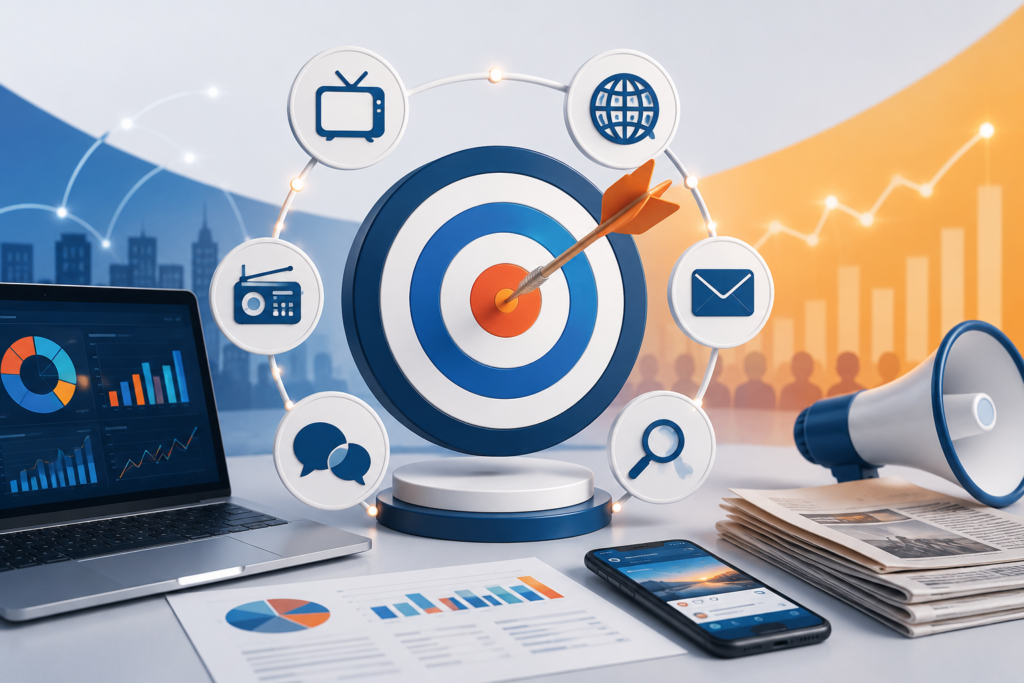
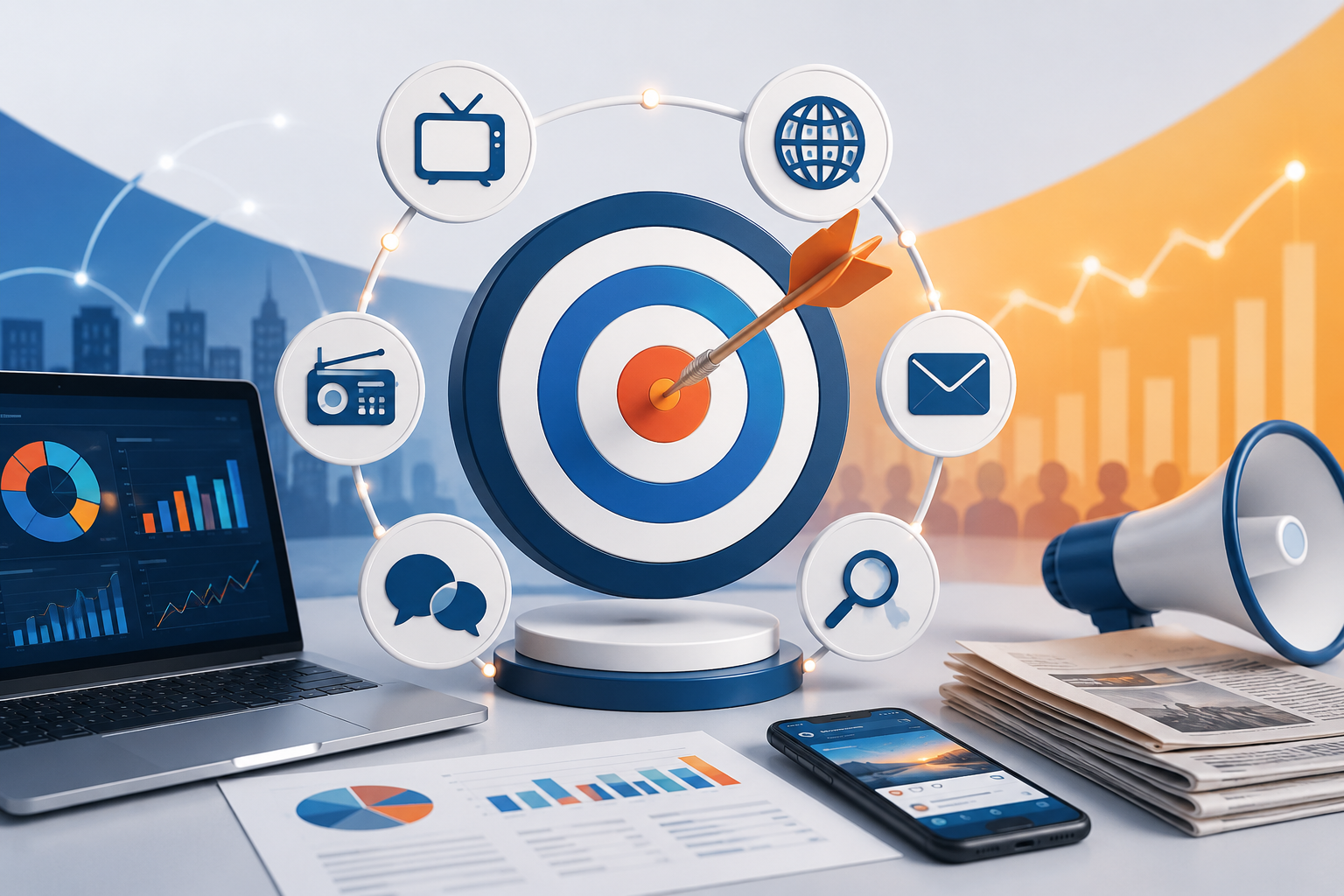
An integrated media strategy is the process of coordinating multiple marketing channels so they work together toward shared business objectives.
Instead of running isolated campaigns, businesses create one connected marketing ecosystem where every platform supports the others.
An integrated strategy typically combines:
- Search engine optimization (SEO)
- Pay-per-click advertising (PPC)
- Content marketing
- Social media marketing
- Email marketing
- Remarketing campaigns
- Website optimization
- Analytics and reporting
The goal is not simply to use multiple marketing channels.
The goal is to ensure each channel contributes to a consistent customer journey while sharing data and insights that improve future marketing decisions.
What Is the Media Mix?
Many business owners ask, what is the media mix, and why does it matter? The media mix refers to the combination of marketing channels a business uses to reach potential customers.
Rather than relying on one source of traffic, businesses distribute marketing efforts across multiple platforms to improve visibility and reduce dependence on any single channel.
| Marketing Channel | Primary Purpose | Supports Other Channels |
|---|---|---|
| SEO | Organic visibility | Supports content and website traffic |
| PPC | Immediate traffic | Tests keywords and landing pages |
| Content Marketing | Education and trust | Improves SEO and email engagement |
| Social Media | Brand awareness | Promotes content and remarketing |
| Email Marketing | Customer retention | Drives repeat visits and conversions |
| Remarketing | Recover lost visitors | Complements PPC and social campaigns |
| Analytics | Performance measurement | Optimizes every channel |
A balanced media mix ensures businesses reach customers throughout different stages of the buying journey rather than relying on a single marketing tactic.
Why Businesses Need Media Integration
Media integration means ensuring every marketing activity communicates the same message while supporting common goals.
Without integration, businesses often experience problems such as:
- Different teams promoting inconsistent messaging
- Duplicate marketing efforts
- Competing advertising campaigns
- Poor attribution
- Inefficient budget allocation
- Difficulty measuring ROI
When channels work together, marketing becomes more efficient because every campaign builds upon previous customer interactions instead of starting from scratch.
For example:
A customer may:
- Find your business through Google.
- Read an educational blog.
- Follow your social media page.
- Click a paid advertisement.
- Join your email list.
- Return through a remarketing campaign.
- Complete a purchase.
Each interaction increases familiarity and trust.
That is the value of effective media integration.
Core Components of Integrated Media Planning
Successful integrated media planning involves much more than selecting advertising platforms. It requires careful coordination across every stage of the customer journey.
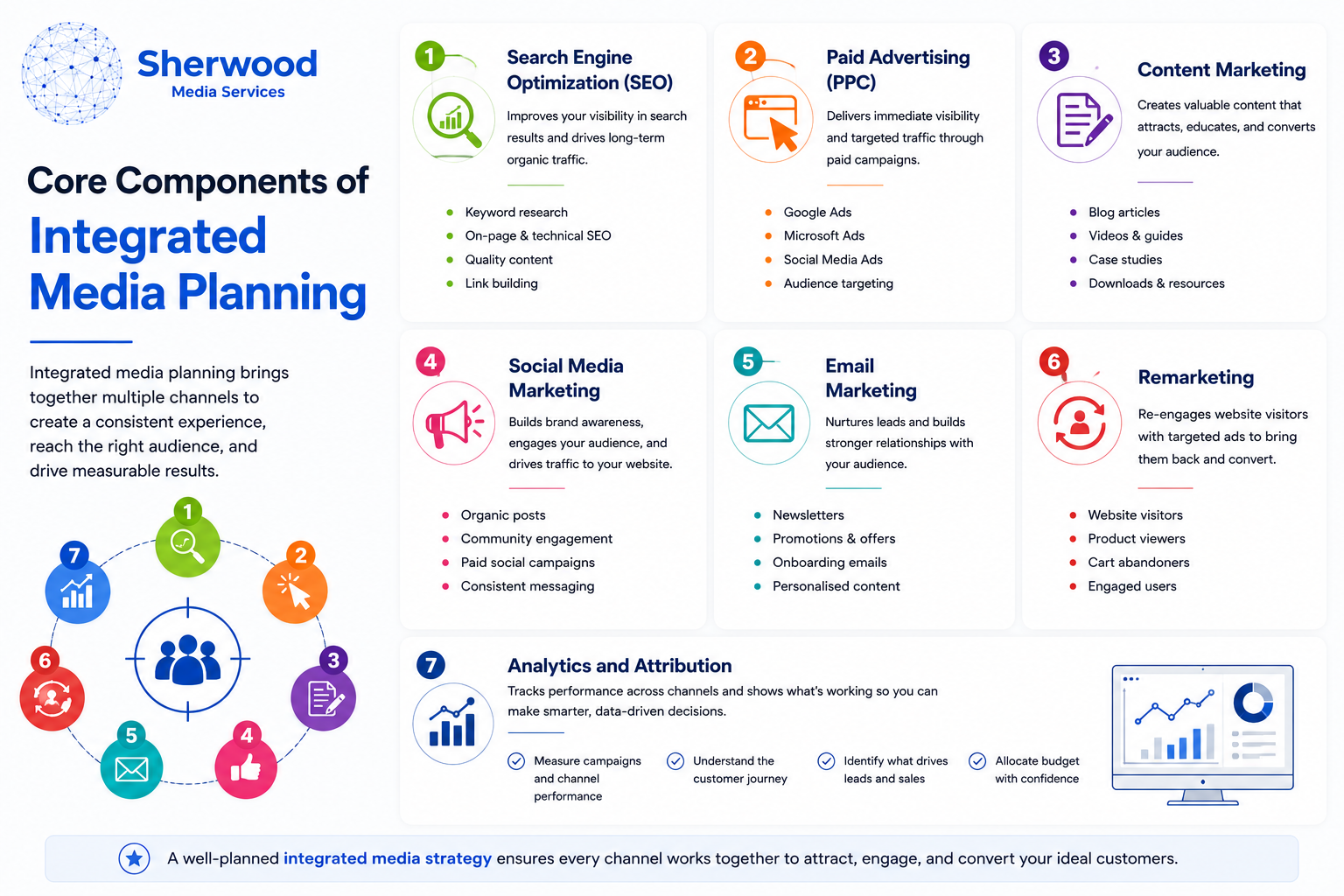
1. Search Engine Optimization (SEO)
SEO helps businesses achieve long-term online visibility by appearing in search results when potential customers are actively looking for products or services. Unlike paid ads, SEO continues to drive traffic over time, making it a cost-effective marketing channel.
A successful SEO strategy typically includes:
- Technical website optimization
- Keyword research
- Local SEO
- High-quality content creation
- Internal linking
- Authority and backlink building
Businesses investing in SEO service Lancaster often benefit from consistent organic traffic, improved search rankings, and a steady flow of qualified leads while reducing reliance on paid advertising.
2. Paid Advertising (PPC)
Pay-per-click (PPC) advertising provides immediate visibility, making it ideal for promoting products, services, seasonal campaigns, or special offers. It also complements long-term SEO efforts by driving targeted traffic while organic rankings grow.
Popular PPC platforms include:
- Google Ads
- Microsoft Ads
- Facebook Ads
- LinkedIn Ads
Beyond generating quick results, paid campaigns provide valuable insights into customer behaviour, audience interests, and high-performing keywords. These insights can then be used to improve SEO, content marketing, and future advertising campaigns.
3. Content Marketing
Content marketing forms the foundation of an integrated media strategy by providing valuable information that attracts, educates, and converts potential customers. Quality content supports multiple marketing channels at the same time, making every piece of content work harder.
Effective content marketing helps businesses:
- Answer customer questions
- Improve search engine visibility
- Build industry authority
- Increase website engagement
- Support email marketing campaigns
- Provide content for social media
Common content formats include:
- Blog articles
- Case studies
- Industry guides
- Videos
- Infographics
- Downloadable resources
When strategically planned, one piece of content can support SEO, social media, email marketing, and paid advertising simultaneously.
4. Social Media Marketing
Social media has evolved far beyond simply gaining followers. As part of an integrated media strategy, it helps businesses strengthen brand awareness, engage with audiences, and drive traffic back to their website.
Social media can be used to:
- Share educational content
- Build customer relationships
- Increase brand visibility
- Generate website traffic
- Support remarketing campaigns
Both organic posts and paid social advertising should reinforce the same messaging used across SEO, content marketing, and email campaigns to create a consistent customer experience.
5. Email Marketing
Email marketing continues to deliver one of the highest returns on investment because it connects with people who have already shown interest in a business. It helps nurture leads, strengthen customer relationships, and encourage repeat purchases.
Email campaigns may include:
- Educational newsletters
- Product or service updates
- Promotional offers
- Customer onboarding sequences
- Event invitations
- Personalised recommendations
For the best results, email campaigns should align with ongoing content, advertising, and remarketing efforts rather than operating as a standalone channel.
6. Remarketing
Most visitors don’t convert during their first visit to a website. Remarketing helps businesses reconnect with these potential customers through targeted advertising, encouraging them to return and complete a purchase or enquiry.
Remarketing campaigns can target users who have:
- Viewed specific products
- Read blog posts
- Downloaded resources
- Started the checkout process
- Submitted an enquiry
- Visited key service pages
Because these audiences are already familiar with the brand, remarketing campaigns often achieve higher engagement and conversion rates.
7. Analytics and Attribution
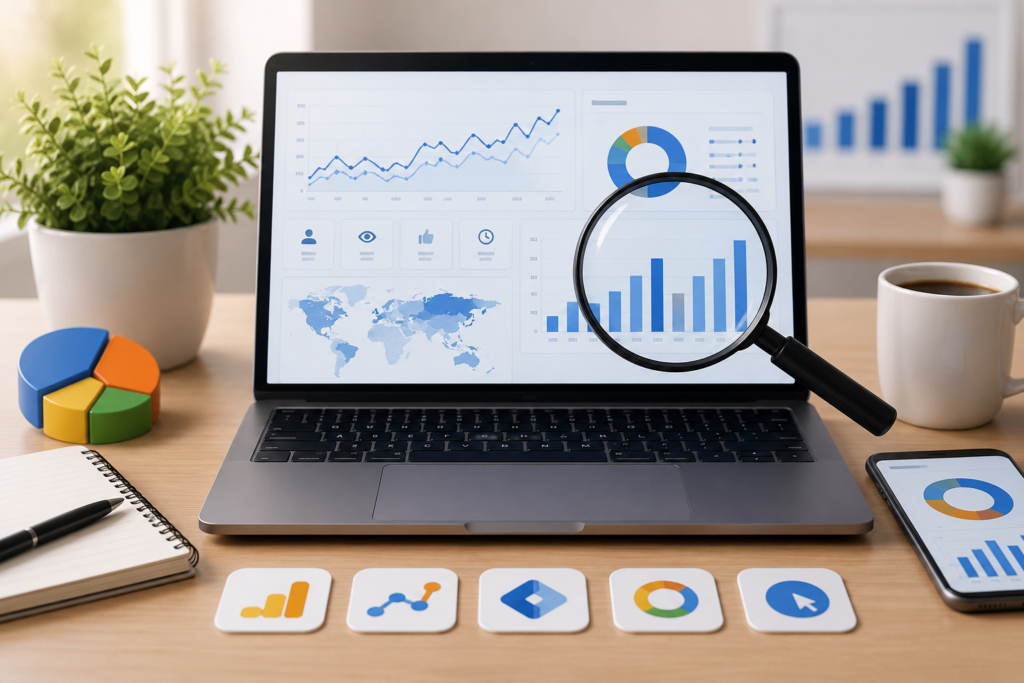
An integrated media strategy is only effective when performance is measured accurately. Analytics and attribution help businesses understand which marketing activities generate leads, sales, and revenue, allowing them to make informed decisions.
Key questions analytics can answer include:
- Which marketing channels generate the most qualified leads?
- Which campaigns produce the highest return on investment?
- Which landing pages convert best?
- How do customers move through the buying journey?
- Where should future marketing budgets be allocated?
Partnering with a website development service Lancaster provider also ensures tracking tools are correctly implemented, giving businesses reliable data to continually improve their marketing performance.
How Integrated Media Strategy Improves ROI
An integrated approach improves return on investment in several important ways.
- Better Budget Allocation: Marketing budgets become more efficient when businesses understand which channels influence conversions rather than focusing only on last-click attribution.
- Consistent Customer Experience: Customers receive the same messaging regardless of whether they interact through Google, email, social media, or paid advertising.
- Higher Conversion Rates: Multiple brand interactions increase familiarity, making customers more likely to convert.
- Better Data: Integrated campaigns generate richer performance insights because channels share data instead of operating independently.
- Continuous Optimization: Marketing becomes an ongoing improvement process rather than a series of disconnected campaigns.
Common Mistakes Businesses Make
Even experienced organizations sometimes struggle with integrated media planning. Some common mistakes include:
1. Focusing on Individual Channels
Success should be measured across the entire customer journey rather than evaluating SEO, PPC, or email separately.
2. Ignoring Attribution
Many conversions involve multiple touchpoints.
Looking only at the final interaction provides an incomplete picture.
3. Inconsistent Messaging
Customers should receive consistent branding, offers, and messaging regardless of platform.
4. Poor Website Experience
Driving traffic is only valuable if visitors can easily navigate the website and convert. Businesses working with a website design service Lancaster often improve user experience, helping marketing campaigns generate stronger results.
5. Not Reviewing Performance Regularly
Marketing strategies should evolve continuously based on performance data.
Steps to Build an Integrated Media Strategy
Creating an integrated marketing system requires planning and continuous improvement.
Step 1: Define Business Objectives
Identify measurable goals such as:
- Lead generation
- Online sales
- Brand awareness
- Customer retention
- Website traffic
These objectives guide every marketing decision.
Step 2: Understand Your Audience
Research:
- Customer demographics
- Buying behaviors
- Pain points
- Preferred communication channels
Audience insights influence channel selection and messaging.
Step 3: Choose the Right Media Mix
Select channels that complement one another rather than competing for attention. Balance short-term tactics such as PPC with long-term investments like SEO and content marketing.
Step 4: Create Consistent Messaging
Ensure every marketing channel communicates the same value proposition while adapting the format for each platform.
Step 5: Measure Everything
Track:
- Website traffic
- Conversion rates
- Lead quality
- Revenue
- Customer acquisition cost
- Return on advertising spend
Analytics should guide future marketing decisions.
Why Integration Is More Important Than Ever
Consumer behavior continues to evolve. Customers move between devices, search engines, email, and social platforms throughout their buying journey. Businesses that continue treating marketing channels independently often struggle to understand customer behavior or accurately measure ROI.
Organizations working with a search engine optimization company Lancaster frequently discover that SEO performs significantly better when supported by high-quality content, paid advertising insights, email nurturing, and detailed analytics.
The future belongs to businesses that connect every marketing activity into one measurable growth system.
Conclusion
An effective integrated media strategy is not about using every available marketing channel. It is about selecting the right combination of channels and ensuring they work together to achieve measurable business objectives.
By combining SEO, PPC, content marketing, social media, email marketing, remarketing, and analytics, businesses create a marketing system that improves customer experiences while delivering stronger long-term ROI.
As marketing continues to evolve, integrated planning will remain one of the most effective ways to make informed decisions, optimize budgets, and generate sustainable growth. At Sherwood Media Services, we believe successful digital marketing is built on connected strategies rather than isolated campaigns. If you’re ready to develop a measurable marketing system tailored to your business goals, get in touch with us to learn how an integrated approach can support your long-term growth.
Frequently Asked Questions
1. What is the media mix in marketing?
The media mix refers to the combination of marketing channels a business uses to reach its audience. An effective media mix balances organic and paid strategies while aligning each channel with customer behavior and business objectives.
2. Why is integrated media planning important?
Integrated media planning ensures marketing channels work together instead of independently. This improves consistency, enhances customer experiences, reduces wasted budget, and provides more accurate performance measurement.
3. How does media integration improve ROI?
Media integration improves ROI by creating consistent messaging across all channels, strengthening customer engagement, supporting better attribution, increasing conversion opportunities, and allowing businesses to optimize marketing investments using performance data.