Key Takeaways
- Your logo is often the first thing potential customers notice, making it one of the most influential elements of your brand identity.
- Well-designed company logos communicate trust, professionalism, and credibility before customers read a single word about your business.
- Elements such as colour, typography, shapes, and simplicity all influence how customers perceive your business and whether they choose to engage with it.
- A consistent logo across your website, marketing materials, and social media strengthens brand recognition and supports a positive online reputation.
- Your logo works best when it is part of a complete branding strategy that includes a professional website, quality content, and a consistent customer experience.
Customers begin forming opinions about a business almost immediately after seeing it. Whether they discover your company through a website, social media profile, business card, or storefront, the first visual element they usually notice is your logo. Those first few seconds can influence whether they see your business as trustworthy, professional, and worth exploring further.
Unlike a sales pitch or marketing campaign, a logo communicates without words. It reflects your company’s personality, values, and attention to detail while creating an identity customers can recognise and remember. A strong logo builds confidence, while an outdated or poorly designed one can create uncertainty, even if your products or services are excellent.
Businesses investing in a professional website design service Lancaster often discover that their logo and website work together to create a consistent brand experience. In this guide, we’ll explore what company logos communicate, why customers judge them so quickly, and how thoughtful logo design contributes to long-term business success.
Why First Impressions Matter More Than Ever
People process visual information much faster than written content. Before a visitor reads your homepage, explores your services, or compares your pricing, they have already developed an opinion based on your branding.
This process happens almost instinctively. Customers often associate visual quality with business quality, even though they have very little information at that point. If your branding appears polished and professional, they are more likely to believe your business delivers reliable products or services.
A logo plays a central role in shaping these first impressions because it appears almost everywhere your business is represented. It is often the first visual element customers encounter and one of the last things they remember after interacting with your brand.
For small businesses and startups competing against larger organizations, creating a strong first impression can be especially valuable. While you may not have decades of market recognition, a professionally designed logo can immediately communicate credibility and help level the playing field.
First impressions influence several customer decisions, including:
- Whether your business appears trustworthy.
- Whether your products or services seem professional.
- Whether customers continue exploring your website.
- Whether they remember your brand later.
- Whether they choose you over a competitor.
Although no logo can guarantee sales, it can encourage customers to take the next step by creating confidence from the very beginning.
What Do Company Logos Actually Communicate?
Many business owners think of a logo as simply an attractive graphic. In reality, a logo serves as a visual summary of your entire brand. Every design choice sends subtle messages that shape how customers perceive your business.
Professionalism
A clean, balanced logo reflects attention to detail and professionalism. Customers often assume that businesses investing in quality branding also care about the quality of their products, services, and customer experience. While this is not always the case, first impressions play a significant role in purchasing decisions.
In contrast, a logo that appears outdated, cluttered, or inconsistent can unintentionally suggest that a business is disorganized, less reliable, or behind current industry standards. This is especially important in competitive markets where customers have many alternatives.
Trustworthiness
Trust is one of the most valuable qualities a business can earn, and your logo helps establish it from the very first interaction.
Although a logo cannot create trust on its own, it reinforces credibility by presenting your business as polished, established, and dependable. Consistent branding across your website, social media, signage, and marketing materials further strengthens this perception.
For example, imagine comparing two companies that offer the same service:
- Company A has a professionally designed logo, consistent brand colours, and a cohesive visual identity.
- Company B uses a low-quality logo, mismatched fonts, and outdated graphics.
Most customers will naturally feel more confident choosing Company A because consistent branding creates a sense of reliability and professionalism.
Brand Personality
Your logo is often the first introduction to your brand’s personality. Before customers read your website or speak with your team, they begin forming opinions based on your visual identity.
Whether your business wants to appear innovative, trustworthy, creative, luxurious, or approachable, your logo helps communicate those qualities immediately.
Several design elements work together to shape your brand personality:
- Colours influence emotional responses and brand perception.
- Typography communicates style, tone, and professionalism.
- Shapes create different psychological associations, such as stability, friendliness, or innovation.
- Spacing and layout improve readability while creating a sense of balance and visual harmony.
When these elements are thoughtfully combined, your logo becomes more than a graphic—it becomes a powerful visual representation of your business, helping customers quickly understand what your brand stands for.
Why Simplicity Makes Company Logos More Memorable
Many of the world’s most recognisable businesses rely on surprisingly simple logos. There is a reason for this. Simple designs are easier for the human brain to process and remember.
Think about how often people search online using phrases like “what company logo is this” after recognising a familiar symbol but forgetting the company name. This demonstrates how strongly visual memory works. Simple logos also remain effective across different marketing channels.
They perform well on:
- Websites
- Mobile devices
- Business cards
- Vehicle graphics
- Uniforms
- Social media profile pictures
- Packaging
- Signage
By comparison, overly detailed logos often lose clarity when displayed at smaller sizes.
A memorable logo does not need elaborate illustrations or multiple colours. Instead, it should focus on clear visual communication that customers can recognise instantly.
Understanding Colour Psychology in Logo Design
Colour influences customer perception more than many business owners realise. People naturally associate colours with specific emotions, experiences, and expectations. Choosing colours carefully helps reinforce the message your business wants to communicate. Below are some common colour associations used in branding.
| Colour | Common Customer Perception | Typical Business Types |
|---|---|---|
| Blue | Trust, reliability, professionalism | Finance, healthcare, technology |
| Green | Growth, sustainability, health | Landscaping, environmental services, wellness |
| Red | Energy, confidence, excitement | Retail, restaurants, entertainment |
| Black | Luxury, authority, sophistication | Premium brands, consulting, fashion |
| Orange | Creativity, friendliness, enthusiasm | Marketing, education, startups |
| Yellow | Optimism, warmth, positivity | Hospitality, family businesses |
These associations are not strict rules, but they provide useful guidance when developing a brand identity. For example, many financial institutions choose blue because customers naturally associate it with stability and trust. Creative agencies often incorporate brighter colours to communicate innovation and energy. Rather than selecting colours based solely on personal preference, businesses should consider the expectations of their target audience and the emotions they want their branding to evoke.
What Typography Says About Your Business
The style of lettering in a logo is just as important as the symbol itself. Typography influences how people interpret your company’s personality, often without them consciously realising it. A clean, modern typeface may suggest innovation and efficiency. A traditional serif font may communicate heritage, reliability, and professionalism. Decorative fonts can appear creative but may reduce readability, especially on mobile devices or smaller printed materials.
Good typography should achieve several objectives.
- It should remain easy to read at every size.
- It should reflect the personality of the business.
- It should complement other branding elements rather than compete with them.
- It should remain timeless instead of following short-lived design trends.
Businesses that maintain consistent typography across their logo, website, and marketing materials create a stronger and more recognisable visual identity.
As businesses continue to strengthen their branding, many also work with a web design agency Lancaster to ensure their typography, colours, and overall visual style remain consistent across every page of their website.
What Businesses Can Learn from Famous Company Logos
Some of the most recognised american company logos have become instantly identifiable around the world. While these businesses have invested heavily in branding over many years, the principles behind their logos can also benefit small businesses and startups.
People often recognise the symbol of a business before they remember its name. This is why searches such as “what company logo is this” or “what company logo” are so common. A memorable logo creates a lasting visual impression that stays with customers long after they leave a website or see an advertisement.
Successful logos share several important characteristics.
They Are Simple Without Being Generic
Simple logos are easier to remember because they reduce visual clutter. Rather than overwhelming customers with unnecessary details, they focus on one clear concept that represents the brand.
This simplicity also makes the logo more versatile. Whether it appears on a website header, business card, billboard, vehicle wrap, or social media profile, it remains recognisable and easy to read.
They Reflect the Brand’s Personality
Every business has a unique identity. A law firm, for example, should project professionalism and trust, while a creative agency may want to communicate innovation and originality.
A logo should reinforce the values and personality of the business rather than simply following current design trends.
They Remain Consistent
Many well-known logos of american companies have evolved over time, but the changes are usually gradual. Instead of completely changing their visual identity every few years, they refine existing elements to remain familiar while keeping the design modern.
Consistency helps customers recognise a business quickly and builds trust through repeated exposure.
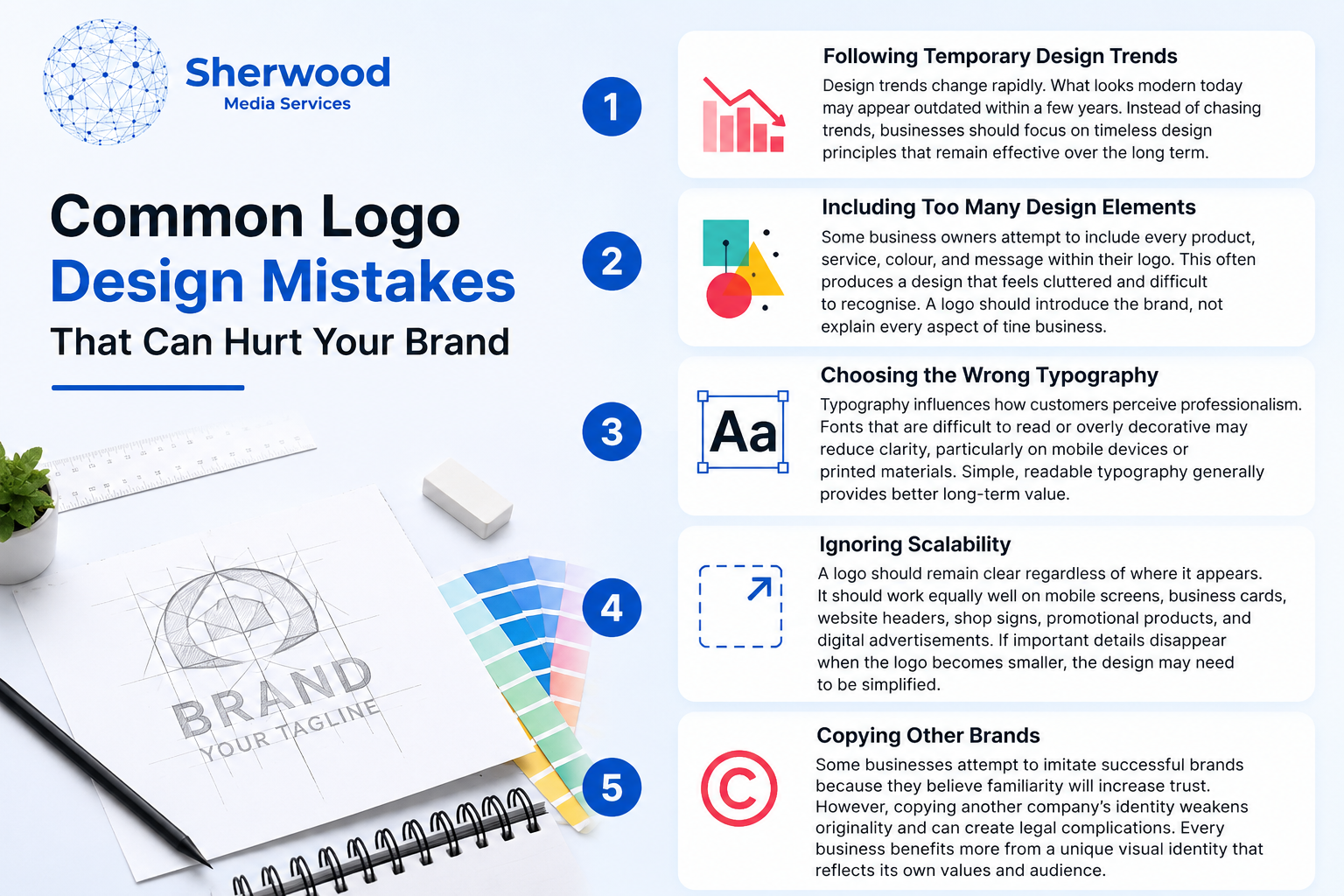
Common Logo Design Mistakes That Can Hurt Your Brand
A logo should represent your business for many years. Unfortunately, many businesses make design decisions that reduce its effectiveness.
1. Following Temporary Design Trends
Design trends change rapidly. What looks modern today may appear outdated within a few years. Instead of chasing trends, businesses should focus on timeless design principles that remain effective over the long term.
2. Including Too Many Design Elements
Some business owners attempt to include every product, service, colour, and message within their logo. This often produces a design that feels cluttered and difficult to recognise. A logo should introduce the brand, not explain every aspect of the business.
3. Choosing the Wrong Typography
Typography influences how customers perceive professionalism.
Fonts that are difficult to read or overly decorative may reduce clarity, particularly on mobile devices or printed materials.
Simple, readable typography generally provides better long-term value.
4. Ignoring Scalability
A logo should remain clear regardless of where it appears.
It should work equally well on:
- Mobile screens
- Business cards
- Website headers
- Shop signs
- Promotional products
- Digital advertisements
If important details disappear when the logo becomes smaller, the design may need to be simplified.
5. Copying Other Brands
Some businesses attempt to imitate successful american brand logos because they believe familiarity will increase trust. However, copying another company’s identity weakens originality and can create legal complications. Every business benefits more from a unique visual identity that reflects its own values and audience.
How Company Logos Influence Customer Trust
Trust is built through consistent positive experiences, but your logo contributes to that process from the very beginning.
When people see a professional logo, they often assume the business is organised, reliable, and established. While these assumptions may not always reflect reality, they strongly influence customer behaviour.
Your logo supports trust by creating consistency across every stage of the customer journey.
For example:
- A customer discovers your business through Google.
- They recognise the same logo on your website.
- They see identical branding on social media.
- They receive emails featuring the same visual identity.
- They visit your location and recognise the same branding on signage.
Each interaction reinforces familiarity, making customers feel more confident about doing business with you.
This is particularly important for local businesses, where trust often determines whether customers make an enquiry or continue searching for alternatives.
Company Logos and Your Online Reputation
A logo alone cannot build a positive reputation, but it becomes the visual symbol associated with every customer experience.
Whenever customers:
- Leave reviews
- Recommend your business
- Share your website
- Mention your company online
- Refer friends or colleagues
your logo becomes increasingly familiar.
Over time, customers stop thinking of the logo as simply a graphic. Instead, they associate it with their experiences, whether positive or negative.
This is why branding should always be supported by excellent customer service, quality products, and consistent communication.
Branding, SEO, and Digital Marketing Work Together
Although search engines do not directly rank websites based on logo design, branding plays an important supporting role in digital marketing.
A recognisable logo encourages users to trust your website, spend more time exploring your content, and remember your business when they need your services in the future.
Strong branding can also contribute to:
- Higher click-through rates from search results
- Increased branded searches
- Better customer recall
- More repeat visitors
- Greater confidence during the buying process
Businesses that combine strong branding with a professional website, useful content, and effective SEO often create a stronger online presence than businesses that focus on only one area.
Working with a trusted SEO service Lancaster helps improve search visibility, while consistent branding ensures visitors feel confident once they arrive on your website.
Similarly, a digital marketing agency Lancaster can help ensure your logo, website, advertising, and online content all communicate a consistent message that strengthens your overall brand identity.
Should Your Business Redesign Its Logo?
A complete redesign is not always necessary, but there are situations where updating your logo makes sense.
Consider reviewing your branding if:
- Your logo looks noticeably outdated.
- Your business has changed significantly since it was created.
- The design performs poorly on mobile devices.
- Customers struggle to recognise your brand.
- Your logo no longer reflects your values or target audience.
- Different versions of the logo are being used across various platforms.
Even small refinements, such as improving typography, simplifying shapes, or modernising colours, can significantly improve the effectiveness of your visual identity without losing existing brand recognition.
Conclusion
Your logo is more than just a design – it is a key part of your brand identity that shapes first impressions, builds trust, and helps customers remember your business. Strong company logos, supported by consistent branding across your website, marketing materials, and digital channels, create a professional image that strengthens customer confidence over time.
At Sherwood Media Services, we understand that successful branding goes beyond creating a great logo. We help businesses build a cohesive online presence that reflects their values and supports long-term growth. Get in touch with us to learn how the right branding and digital marketing strategy can help your business stand out and grow with confidence.
Frequently Asked Questions
1. Why are company logos important for small businesses?
Company logos create the first impression of your business. A professional logo helps establish trust, improves brand recognition, differentiates your business from competitors, and creates consistency across your website, marketing materials, and social media platforms.
2. How often should a business update its logo?
There is no fixed schedule. Businesses should consider updating their logo when it no longer reflects their brand, appears outdated, performs poorly across digital platforms, or after significant changes to their products, services, or target audience.
3. Can a logo improve search engine rankings?
A logo does not directly affect SEO rankings. However, strong branding supports user trust, encourages repeat visits, increases branded searches, and contributes to a better overall user experience, all of which complement a broader SEO strategy.
4. What makes a company logo memorable?
Memorable company logos are simple, relevant, scalable, and consistent. They use appropriate colours, readable typography, and distinctive design elements that customers can quickly recognise and associate with the business over time.