
Key Takeaways
- Manufacturing buyers now complete much of their research online before contacting a supplier, making digital visibility essential for consistent lead generation.
- A successful digital marketing for manufacturers strategy combines SEO, content marketing, AI search optimization, local visibility, and conversion-focused website design.
- Industrial businesses should measure marketing success using qualified leads, pipeline value, conversion rates, and customer acquisition cost instead of website traffic alone.
- Long-form educational content, technical resources, and industry expertise help manufacturing companies build trust with engineers, procurement teams, and decision-makers.
- Sustainable inbound marketing creates long-term growth by attracting prospects actively searching for industrial solutions rather than relying solely on outbound sales.
Manufacturing companies have traditionally depended on referrals, trade shows, distributors, and long-standing business relationships to generate new opportunities. While these channels remain valuable, modern B2B buyers now begin their purchasing journey online. Engineers, procurement managers, plant supervisors, and executives research suppliers extensively before requesting a quote or speaking with a sales representative.
This shift has made digital marketing for manufacturers one of the most effective ways to attract qualified prospects and build a predictable sales pipeline. Rather than competing only at industry events, manufacturers can now position themselves where buyers actively search for technical information, product specifications, certifications, and industry expertise.
A well-planned digital marketing strategy focuses on attracting buyers who already have purchasing intent. Instead of generating large amounts of untargeted traffic, manufacturers benefit from educating prospects, answering technical questions, and demonstrating credibility throughout the buying process.
Sherwood Media Services work with businesses seeking long-term online growth by combining SEO, website performance, content strategy, and measurable lead generation. Businesses looking for a digital marketing company Lancaster can also benefit from similar inbound approaches that prioritize qualified opportunities over vanity metrics.
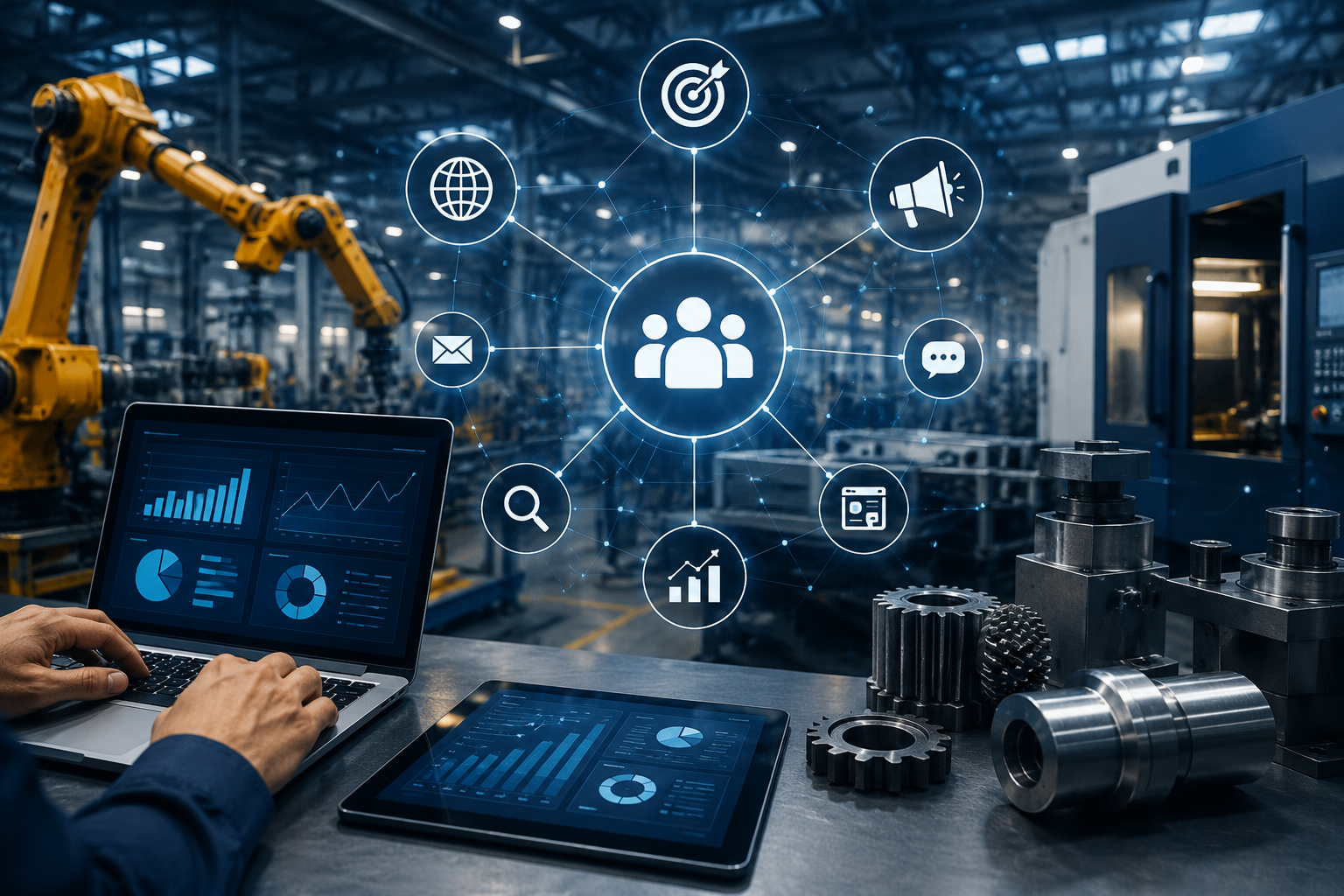
Why Digital Marketing Matters More Than Ever for Manufacturers
Manufacturing purchasing cycles is often complex.
A single purchasing decision may involve:
- Engineering teams
- Purchasing departments
- Operations managers
- Company executives
- Compliance specialists
Because several stakeholders participate in the buying process, prospects spend considerable time researching suppliers before making contact.
Modern buyers commonly search for:
- Technical product information
- Industry certifications
- Manufacturing capabilities
- Production capacity
- Quality standards
- Case studies
- Customer reviews
If your business cannot be found during these searches, competitors become the obvious choice.
This explains why marketing for manufacturers has shifted from traditional advertising toward educational content, search optimization, and digital authority.
Understanding the Modern Manufacturing Buyer’s Journey
Industrial purchasing rarely happens after a single website visit. Instead, buyers typically move through several stages.
Stage 1: Problem Identification
Buyers begin searching for answers to operational challenges.
Examples include:
- Reducing production costs
- Improving efficiency
- Finding replacement suppliers
- Meeting regulatory requirements
- Increasing manufacturing capacity
At this point, educational content performs better than direct sales messaging.
Stage 2: Research
Next, buyers compare multiple suppliers.
They evaluate:
- Experience
- Industry specialization
- Certifications
- Technical expertise
- Delivery capabilities
- Production quality
This is where industrial digital marketing supports visibility through informative blog articles, resource pages, videos, and technical documentation.
Stage 3: Evaluation
After narrowing their options, prospects compare suppliers more closely.
Important decision factors include:
- Website credibility
- Product documentation
- Customer testimonials
- Case studies
- Response times
- Technical support
A professional online presence helps build confidence before the first sales conversation.
Core Components of Digital Marketing for Manufacturing Companies
Successful digital marketing for manufacturing companies combines multiple channels that work together rather than independently.
Search Engine Optimization (SEO)
SEO allows manufacturing businesses to appear when buyers search for industrial products or services.
Effective manufacturing SEO includes:
- Technical SEO improvements
- Keyword research
- Product page optimization
- Local SEO
- Industry-specific landing pages
- Internal linking
- Structured data
- AI search optimization
Instead of focusing on broad keywords, manufacturers should target high-intent searches that indicate purchasing interest.
Content Marketing
One of the strongest long-term strategies is content marketing for manufacturing companies. Educational content helps answer technical questions while establishing expertise.
Useful content includes:
- Buying guides
- Industry trends
- Technical comparisons
- Product selection guides
- Maintenance resources
- Manufacturing process explanations
- Regulatory updates
High-quality content also improves search visibility over time.
Website Performance
Many manufacturing websites still prioritize company history over buyer needs. Instead, websites should clearly communicate:
- Products
- Capabilities
- Industries served
- Certifications
- Competitive advantages
- Contact information
- Quote request process
Manufacturers investing in a website design service Lancaster often discover that improved usability increases conversions alongside search visibility.
Building an Effective Digital Marketing Strategy for Manufacturing Industry
Every manufacturer has different markets, products, and sales cycles. However, a structured framework generally follows the same process.

Step 1: Identify Your Ideal Customer
Define:
- Industries served
- Company size
- Geographic markets
- Decision-makers
- Common challenges
Understanding buyer intent improves every marketing decision.
Step 2: Perform Keyword Research
Rather than targeting only high-volume keywords, focus on commercial intent. Examples include:
- Product-specific searches
- Industry applications
- Technical specifications
- Service locations
- Manufacturing processes
These searches typically generate higher-quality inquiries.
Step 3: Build Topic Authority
Instead of publishing unrelated articles, organize content into subject clusters. For example:
Main topic:
- Industrial machining
Supporting topics:
- Material selection
- Precision tolerances
- CNC processes
- Quality control
- Industry certifications
This strengthens overall SEO performance.
Step 4: Optimize Conversion Paths
Every page should guide visitors toward a logical next step.
Examples include:
- Request a quote
- Download specifications
- Schedule consultation
- Contact engineering team
- Request product samples
AI Search Optimization Is Changing Manufacturing SEO
The way people search for information is changing rapidly. AI-powered search engines and AI-generated search experiences now summarize information directly within search results, allowing users to get answers without always visiting a website. While this changes how traffic reaches websites, it also creates new opportunities for manufacturers that publish high-quality, informative content.
Manufacturing companies can improve their visibility in AI-driven search by creating content that focuses on educating potential customers rather than simply targeting keywords. AI systems are designed to identify content that demonstrates expertise, answers questions accurately, and provides complete information.
To improve AI search visibility, manufacturers should focus on the following best practices:
1. Answer Technical Questions Clearly
Manufacturing buyers often search for detailed information about materials, production processes, certifications, tolerances, equipment capabilities, and industry standards. Content should answer these technical questions using clear, straightforward language while maintaining accuracy. Providing practical explanations helps both potential customers and AI search systems understand the value of your expertise.
2. Use Structured Headings
Well-organized content is easier for both readers and search engines to understand. Using logical heading structures (H2 and H3 sections) helps break complex topics into manageable sections, making it easier for AI systems to identify the main topics and extract relevant information for search summaries.
3. Include Detailed Explanations
Rather than providing short or surface-level answers, manufacturers should explain concepts thoroughly. Detailed content that discusses processes, applications, benefits, limitations, and best practices demonstrates expertise and gives readers the information they need to make informed decisions.
4. Demonstrate Subject Expertise
Publishing content based on real manufacturing knowledge builds credibility. Sharing insights into production methods, quality control procedures, compliance requirements, material selection, and industry trends helps establish your business as a trusted authority. AI search systems increasingly prioritize content that reflects genuine expertise.
5. Cover Related Subtopics Comprehensively
Comprehensive content performs better than pages that focus on a single keyword. For example, a page about CNC machining can also discuss material options, design considerations, machining tolerances, finishing processes, quality assurance, common applications, and cost factors. Covering related topics provides greater value to readers while improving topical authority.
Instead of rewarding keyword repetition, AI-powered search increasingly favours content that is accurate, informative, and genuinely useful. For companies investing in digital marketing for the manufacturing industry, creating educational resources, technical guides, and in-depth industry content has become an important strategy for maintaining online visibility as search technology continues to evolve.
Local SEO Still Matters for Industrial Companies
Although many manufacturers sell products and services across multiple states or even nationwide, a significant number also serve regional markets or rely on nearby customers, distributors, contractors, and business partners. Local SEO helps manufacturing companies become more visible when buyers search for suppliers within a specific geographic area.

A well-executed local SEO strategy strengthens online visibility while building trust with nearby customers who often prefer working with accessible, established manufacturers.
Key components of local SEO include:
1. Google Business Profile
A complete and regularly updated Google Business Profile improves visibility in local search results and Google Maps. Accurate business information, operating hours, service categories, product details, and high-quality facility photos help potential customers find and evaluate your business more easily.
2. Location-Specific Service Pages
Manufacturers serving multiple cities or regions should create dedicated pages for each service area. These pages should provide relevant local information rather than duplicate content, helping search engines understand where your business operates while giving local buyers information tailored to their region.
3. Local Citations
Consistent business listings across reputable online directories to strengthen local search signals. Keeping your company name, address, phone number, and website information consistent across directories improves credibility and supports stronger local rankings.
4. Customer Reviews
Positive reviews play an important role in local SEO while also influencing purchasing decisions. Encouraging satisfied customers to leave genuine reviews helps build trust, demonstrates reliability, and can improve visibility in local search results.
5. Regional Industry Content
Creating content focused on local manufacturing trends, regional regulations, community involvement, or projects completed within your service area helps establish relevance for nearby searches. Publishing location-specific case studies, industry updates, and educational resources further strengthens your local online presence.
For manufacturers looking to increase their presence within specific regions while maintaining broader national visibility, partnering with experienced SEO professionals can support both objectives. Businesses expanding their regional reach often work with an SEO service Lancaster to strengthen local search performance while continuing to build authority across wider markets.
Measuring Success Beyond Website Traffic
Manufacturers should evaluate marketing based on business outcomes rather than page views.The following metrics provide more meaningful insights.
| KPI | Why It Matters | Goal |
| Organic Traffic | Measures SEO growth | Increasing qualified visitors |
| Qualified Leads | Indicates buyer intent | Higher monthly lead volume |
| Conversion Rate | Shows website effectiveness | Continuous improvement |
| Cost Per Lead | Measures efficiency | Lower acquisition costs |
| Sales Pipeline Value | Connects marketing to revenue | Higher opportunity value |
| Keyword Rankings | Tracks visibility | Growth for commercial keywords |
| Quote Requests | Indicates purchasing interest | Consistent increase |
Actionable Steps to Execute Industrial Marketing
Implementing a successful digital marketing strategy for manufacturing industry growth requires a structured, step-by-step approach.
Step 1: Conduct a Technical Digital Audit
Assess your current web footprint to identify structural weaknesses, broken spec links, slow page load times, and unoptimized capability pages.
Step 2: Build Capability-Specific Landing Pages
Avoid grouping distinct manufacturing services onto a single generic page. Create dedicated URLs for each core capability, such as precision stamping, laser cutting, or contract assembly.
If your business provides specialized regional services, such as industrial site prep or demolition, partnering with a targeted team for digital marketing for demolition contractors Lancaster ensures your specialized pages capture maximum local market share.
Step 3: Implement Schema Markup for AI and Search Engines
Modern search engines and AI search assistants utilize structured data to understand exact business capabilities. Incorporating specialized schema markup clarifies your operational scope, location, and service catalog to search engines.
Step 4: Streamline the RFQ Process
Remove unnecessary friction from your contact forms. Allow engineers to upload CAD files directly, select project timelines, and detail material requirements.
Common Mistakes Manufacturing Companies Should Avoid
Many manufacturers invest in marketing without a clear long-term strategy. Avoiding these common mistakes can improve lead generation and long-term marketing performance.
1. Focusing Only on Traffic
High visitor numbers do not automatically translate into qualified leads. Attracting the right audience is far more valuable than simply increasing website traffic. Quality should always take priority over volume.
2. Ignoring Technical Content
Manufacturing buyers often look for detailed specifications, product information, and technical insights before making purchasing decisions. Generic marketing copy rarely answers these questions or builds trust with potential customers.
3. Publishing Inconsistent Content
SEO is a long-term strategy that delivers results through consistency. Publishing one article every few months rarely builds meaningful authority or improves search visibility.
4. Neglecting Website Experience
A slow-loading website, outdated navigation, and unclear messaging can reduce conversions even if your search rankings are strong. Businesses working with experienced website developers in Lancaster often improve both usability and lead generation by addressing technical performance issues.
How Inbound Marketing Creates Sustainable Growth
Unlike paid advertising, inbound marketing continues generating results long after content is published. Inbound marketing for manufacturers focuses on attracting prospects naturally through helpful information.
Benefits include:
- Lower long-term acquisition costs
- Higher-quality leads
- Greater search visibility
- Stronger brand credibility
- Better customer education
- Improved sales conversations
Over time, educational content becomes a valuable business asset that continues to attract potential buyers.
Why SEO Supports Every Other Marketing Channel
SEO is not separate from digital marketing.
Instead, it strengthens nearly every other initiative.
For example:
- Blog content improves organic visibility.
- Technical resources support email campaigns.
- Optimized landing pages increase paid advertising performance.
- Educational content provides material for social media.
- Case studies strengthen sales presentations.
Manufacturers searching for digital marketing services Lancaster often discover that integrating SEO with website optimization and content marketing produces more sustainable long-term results than isolated campaigns.
Conclusion
Manufacturing buyers increasingly rely on search engines and digital research before contacting suppliers. Businesses that invest in educational content, technical SEO, AI search optimization, local visibility, and conversion-focused websites are better positioned to attract qualified opportunities throughout the buying journey.
Rather than chasing short-term traffic gains, successful manufacturing digital marketing focuses on measurable business outcomes such as qualified leads, stronger sales pipelines, and long-term organic growth. By developing an effective digital marketing strategy for the manufacturing industry, manufacturers can build lasting visibility while supporting both sales and customer education.
Sherwood Media Services understands the importance of creating sustainable inbound marketing strategies that align with business goals. If your manufacturing business is looking to strengthen its online presence and generate more qualified leads, get in touch with us to discuss a strategy tailored to your growth objectives.
FAQs
1. Why is digital marketing important for manufacturers?
Digital marketing for manufacturers helps industrial businesses attract buyers actively searching online for products, services, and technical expertise. It increases visibility, supports lead generation, and builds long-term credibility throughout the purchasing process.
2. What is the best digital marketing strategy for manufacturing companies?
An effective strategy combines SEO, technical content, AI search optimization, local SEO, website optimization, and content marketing for manufacturing companies. Together, these tactics generate qualified leads while improving long-term organic growth.
3. How long does manufacturing SEO take to generate results?
Most manufacturers begin seeing measurable SEO improvements within three to six months. Highly competitive industries may require additional time, but consistent optimization and quality content typically deliver sustainable long-term growth.
4. Which KPIs should manufacturing companies monitor?
Manufacturers should monitor qualified leads, organic traffic, conversion rates, keyword rankings, quote requests, sales pipeline value, and customer acquisition costs. These metrics provide a clearer picture of marketing performance than traffic alone.